

SUBSCRIBE TO OUR FREE NEWSLETTER
Daily news & progressive opinion—funded by the people, not the corporations—delivered straight to your inbox.
5
#000000
#FFFFFF
To donate by check, phone, or other method, see our More Ways to Give page.
Daily news & progressive opinion—funded by the people, not the corporations—delivered straight to your inbox.

"While Americans suffer from high prices and the Iran war imposes tens of billions of dollars of new costs on the American public, the oil industry wins big."
ExxonMobil and Chevron repeated $26.5 billion in combined profits in the second quarter of 2026 as US President Donald Trump's illegal war on Iran drove up gas prices around the world, punishing consumers at the pump while boosting oil companies' bottom lines.
Chevron on Friday announced $12 billion in profits for the second quarter—its highest quarterly profit in six years—while Exxon posted $14.5 billion. Exxon touted its "industry-leading shareholder distributions," which "totaled $9.4 billion, including $4.3 billion of dividends and $5.1 billion of share repurchases."
Reuters noted that the two companies' results "mirrored those of European oil majors TotalEnergies and Shell, which also posted banner second-quarter profits buoyed by higher oil prices."
The oil giants' earnings came weeks after a Harris survey found that 95% of Americans believe the US is facing an affordability crisis, with gas and groceries at the top of the list of "unaffordable goods and services." The current national average price for a gallon of gas is $4.1.
"The pattern is consistent: While Americans suffer from high prices and the Iran war imposes tens of billions of dollars of new costs on the American public, the oil industry wins big," a group of Democratic senators wrote in a recent letter. "President Trump has made the calculus explicit in his own words. When it comes to families facing increasing prices in the context of the Iran war, he said: ‘I don’t think about Americans’ financial situation.'"
Sierra Club said Thursday that Big Oil's wartime profits are "paid by you," and called for a "windfall profits tax to recover a portion of the excess profits oil companies rake in during a global crisis and return that money to the people who paid higher prices."
"At the same time as oil and gas companies are preparing for a multibillion-dollar payday, they are working with the Trump administration to block investment in clean energy sources that would make American families more energy independent," the group added. "It's time to make polluters pay."

It’s unclear how more temporary ceasefires in hostilities between the growing number of parties involved in the Iran-US war can solve problems such as the rise of gas prices and fall of spending on other commodities.
Getting a cup of complimentary coffee at my credit union recently, I glanced to the left and saw a younger woman with a mass of pennies placing them into a machine for conversion to cash. "The US Mint stopped producing pennies," I said to her. “They might be valuable.”
She quickly replied, "I need gas."
Rising gas prices are an outcome of the US war of aggression against Iran, begun five months ago. As a result, inflationary pressures are rising stateside.
One thing is plain as day. Ceasefires between Iran and the US are temporary and connect with fluctuations of oil prices, currently increasing. Rising prices of oil drive price increases at the gas pump.
The logic of military conflicts is one of unpredictable outcomes, economically and politically.
Meanwhile, this sentence in the recent Bureau of Labor Statistics inflation report stands out like a third thumb. “The index for energy increased 15.7% over the past 12 months due in large part to the index for gasoline rising 26.7% over the same period." That spike is despite presidential announcements about how well the war against Iran is going for the US to his dual audiences of MAGA voters and capitalist investors.
Apparently, repetition of a falsification has limitations. Don’t tell the president, though.
Inflation as a result of supply disruptions as we experienced with global value chains during the pandemic is a systemic contradiction. Global economic integration, e.g., the shift of US industry abroad that increases the distances of supply chains, is no risk-free strategy to increase profits and market share for corporate America.
We see in real time that the global economy which requires oil to operate feeds the imbalance between consumption, production, and distribution of commodities such as energy. The shutdown of the Strait of Hormuz and Red Sea with Yemen’s entry into the Iran-US war are driving the decrease in oil production and distribution, and therefore consumption.
Under the current phase of capitalism, or neoliberalism, the government shores up the weakening buying power of the working class with direct support of the corporations and the wealthy. In the case of the Iran-US war, despite the endless American taxpayer outlays for military spending with bipartisan support, the dwindling supply of energy from the Persian Gulf that businesses and consumers rely upon is driving inflationary pressures. The rise of gas prices is proof of that. There’s more.
Spending a bigger chunk of household income on gas means that working families spend less in other areas. Take fast food spending. Consumption of fast food is down 4% in May 2026 from its peak in September 2025, according to the US Bureau of Economic Affairs.
It’s unclear how more temporary ceasefires in hostilities between the growing number of parties involved in the Iran-US war, now including Saudi Arabia and Yemen, can solve problems such as the rise of gas prices and fall of spending on other commodities in the US. The logic of military conflicts is one of unpredictable outcomes, economically and politically. Claiming to know what's next is a fool's errand.
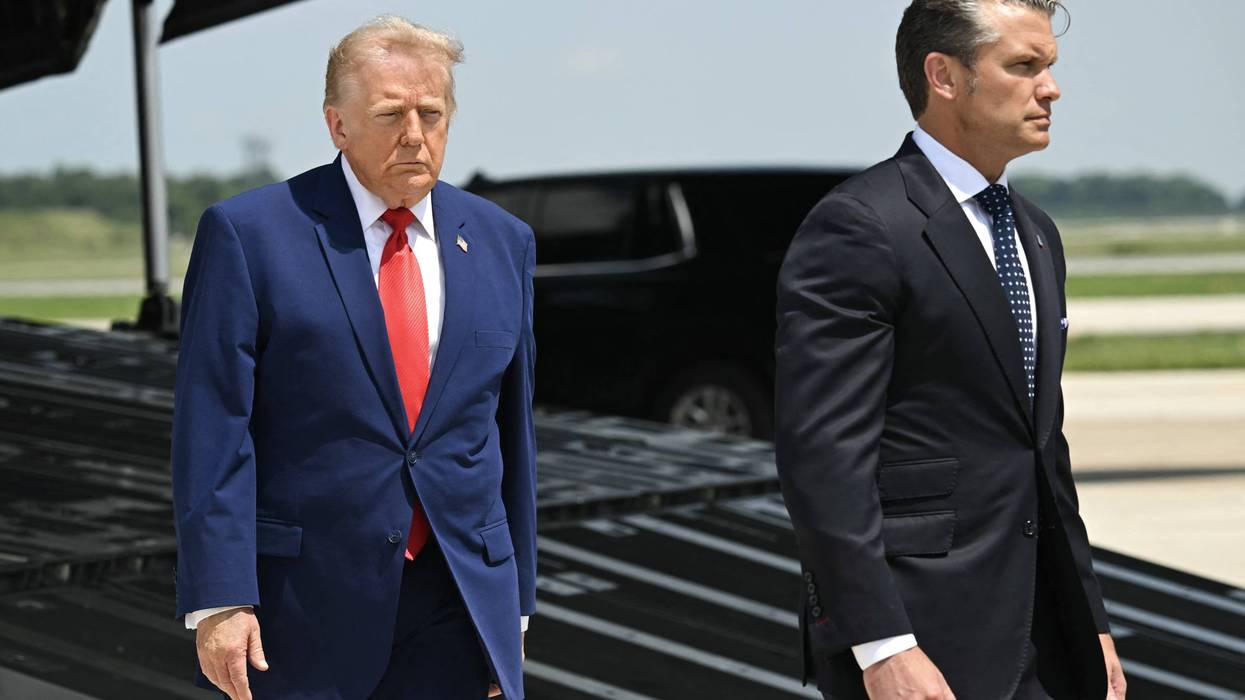
"Listen to the American people. Vote to end this war," said Sen. Chuck Schumer. "We’re going to keep forcing Republicans to vote until we do.”
The vast majority of US Senate Republicans were joined by Democratic Sen. John Fetterman on Thursday in voting against a war powers resolution to block the Trump administration from continuing to attack Iran without congressional approval, as new polling showed nearly two-thirds of Americans think the war is not worth fighting.
For the second time in as many weeks and the 13th time this year, Senate Democrats called on Republicans to limit President Donald Trump's authority to take military action, pointing to rising anger over the assault on Iran, which has killed at least 18 US service members and more than 3,400 Iranians, as well as thousands more across the region, mostly in Lebanon, as Iran has retaliated in the unprovoked US-Israeli conflict.
“Are Senate Republicans listening? The country is clamoring for you to end this war,” Senate Minority Leader Chuck Schumer (D-NY) said. “I urge and plead with my Republican colleagues: Listen to the American people. Vote to end this war. We’re going to keep forcing Republicans to vote until we do.”
The Associated Press-NORC Research Center poll released Thursday showed that 64% of Americans disapprove of the continuation of the war, including 37% of Republicans. Seventy percent of respondents said the Trump administration should prioritize a permanent ceasefire with Iran after a memorandum of understanding to end the war collapsed in early July and Trump relaunched attacks on the Middle Eastern country.
Seventy-two percent of respondents also said it was "extremely" or "very" important to them to ensure gas and oil prices are reduced after the war. Iran's closure of the Strait of Hormuz has sent the price of gas soaring—adding to Americans' concerns over the rising cost of essentials.
Three Republicans—Sens. Susan Collins (Maine), Lisa Murkowski (Alaska), and Rand Paul (Ky.)—joined Democrats in supporting the war powers resolution, with a final vote of 50-49. But even Republicans who supported allowing Trump to continue the war he started in February, despite the fact that the War Powers Act of 1973 only gives him 60-90 days to end a conflict he has started, addressed the cost-of-living crisis the war is worsening.
“The rising gas prices are a real concern to everybody,” Sen. Mike Rounds (R-SD) said.
Sen. Kirsten Gillibrand (D-NY) said on the Senate floor Thursday that while Trump is "pouring billions of tax dollars into an open ended war in Iran, this reckless war is driving up monthly bills and making everyday life harder for working families. "
.@SenGillibrand (D-NY) urges for passage of Iran War Powers Resolution, ahead of the vote: "This reckless war is driving up monthly bills and making everyday life harder for working families... Under the constitution, we have the power to end the war today — let's use it!" pic.twitter.com/zhLNOzNioZ
— CSPAN (@cspan) July 30, 2026
The resolution failed hours after Iranian media reported that one of the strikes by US Central Command Wednesday night had killed a family of three, including a 2-year-old child.

"We have got to end the absurdity of the Pentagon being the only major federal agency that has never passed an independent audit."
Bipartisan legislation reintroduced Thursday by Sens. Bernie Sanders and Chuck Grassley would impose budgetary penalties on the US Department of Defense for failing to pass a complete and independent audit.
If enacted, the Audit the Pentagon Act would withhold 2% of the budget of any Defense Department office that fails to achieve a clean audit, and the funds would be returned to the US Treasury.
The Pentagon has failed eight consecutive audits without any consequences, as lawmakers from both parties continue to approve massive budget increases each year. For fiscal year 2027, the Trump administration is seeking $1.5 trillion in total military spending as it wages war against Iran with no end in sight.
“The Pentagon has been plagued by a massive amount of waste, fraud and financial mismanagement for decades,” Sanders (I-Vt.) said in a statement on Thursday. “Year after year, the Pentagon fails an audit, and year after year, Congress hands it another blank check."
"At a moment when the administration has dragged us into an unconstitutional war with Iran and is demanding the largest military budget in our history to pay for it, the Pentagon still cannot tell us where trillions of dollars have gone," Sanders added. "We have got to end the absurdity of the Pentagon being the only major federal agency that has never passed an independent audit.”
The Audit the Pentagon Act has 10 Senate co-sponsors so far: Ron Wyden (D-Ore.), Chris Van Hollen (D-Md.), Elizabeth Warren (D-Mass.), Cory Booker (D-NJ), Tina Smith (D-Minn.), Ed Markey (D-Mass.), Mike Lee (R-Utah), Jeff Merkley (D-Ore.), Rand Paul (R-Ky.), and Chris Murphy (D-Conn.).
The latest version of the bill, which was first introduced in 2021, comes as the Trump administration is seeking tens of billions of dollars in funding for the Iran war, which Congress never authorized. Experts have warned for months that the Pentagon is not being transparent about the war's financial cost, which is likely to be far higher than the department's official estimate of $37.5 billion.
“You have the largest agency in terms of discretionary spending for eight years in a row unable to explain and defend the funding that they have, and we have seen enormous examples of waste and fraud,” Sanders told NBC News in an interview. “Tell us where that money is going, period.”
In a press release, Sanders' office highlighted several examples of what it described as "waste and fraud" at the Pentagon:
Earlier this month, a version of the Audit the Pentagon Act was attached to the House's National Defense Authorization Act (NDAA). The Senate Democratic caucus blocked the upper chamber's version of the NDAA earlier this month over President Donald Trump's illegal Iran war.
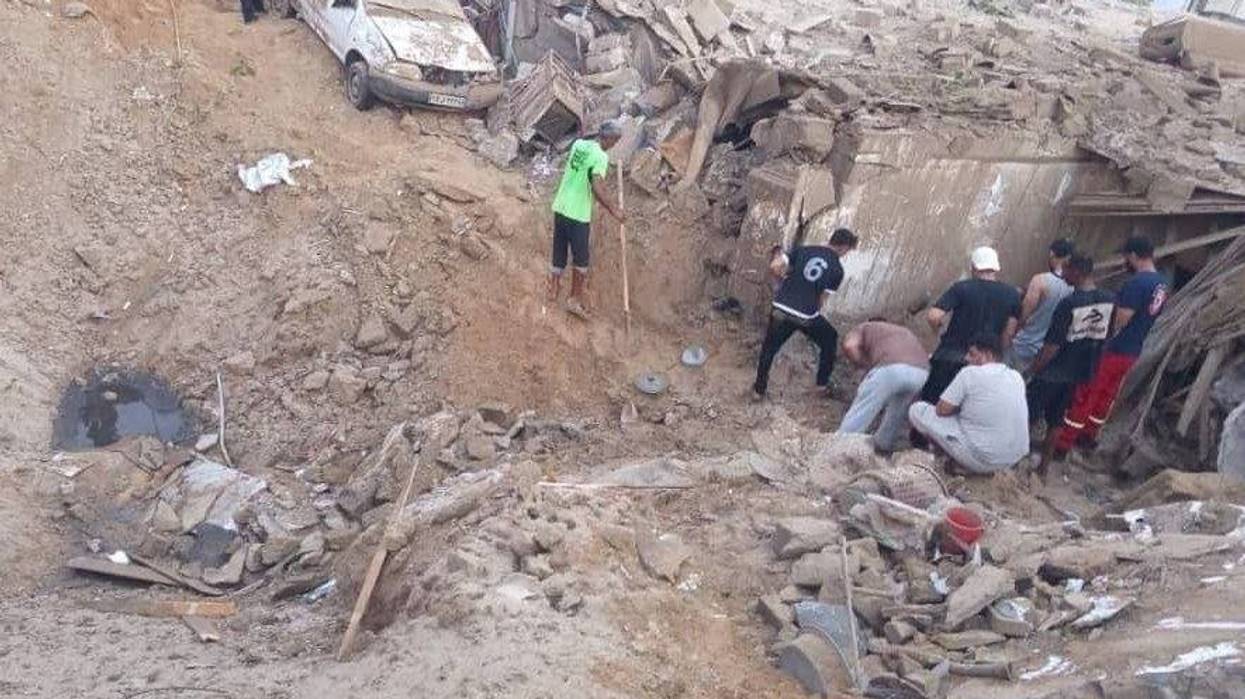
Iran has reported that at least 383 children, including seven infants, had been killed in the US-Israeli war there, prior to the resumption of attacks this month.
A family of three, including their 2-year-old child, were killed by US strikes against a residential building in Iran's Qeshm City, according to reports from Iranian media on Thursday.
Videos posted by the official IRNA news agency showed rescue teams searching through rubble for survivors. Two other children, ages 7 and 9, were found wounded in the wreckage and have been transported to the hospital, according to the agency.
The US attack on the building in the neighborhood of Chah Tangu was one of several launched against residential areas across Qeshm Island in the Persian Gulf overnight in what US Central Command (CENTCOM) said were dozens of strikes on Iranian Revolutionary Guard Corps (IRGC) sites across the country.
The IRGC said that it would respond to Thursday's strikes by hitting back against the “aggressor." Iranian strikes on sites in Kuwait and Jordan followed shortly after, leading to the death of a worker in a Chinese-owned building in Kuwait. Iran also claimed that its attacks destroyed US aircraft in Jordan, which has not been confirmed.
The wave of US attacks came after Trump vowed on Wednesday to "beat the fucking shit out of" Iran after it fired ballistic missiles toward US troops in Jordan, the first such strike since a brief bombing pause over the weekend. The US also partnered with Saudi Arabia to carry out attacks on Iran-backed militias in Iraq, which reportedly killed 20 fighters and six Iranian advisers.
In a statement on Thursday, CENTCOM said it had "successfully completed a heavy wave of strikes" against Iran "in response to yesterday’s attempted missile attacks on US forces." It did not specify the strategic reason for the strikes on Qeshm or acknowledge the reported civilian casualties.
According to the US-based Human Rights Activists News Agency (HRANA), at least 254 children have been killed in Iran since the US and Israel launched the war on February 28, among more than 1,700 total civilians.
Iran has reported that at least 383 children, including seven infants, had been killed over the course of the war, prior to the resumption of attacks in July. With Thursday’s attacks, at least three more children have been killed since the conflict resumed this month.
Many of those casualties include at least 123 children killed by US strikes on the Shajareh Tayyebeh elementary school in Minab on the first day of the war. Earlier this month, Trump declined to release the findings of a Pentagon investigation into the massacre, saying it would be impossible to ever determine who was at fault.
Since restarting the war earlier this month, the US has focused its attacks on southern Iran in areas near the Strait of Hormuz, where Iran has once again functionally blocked travel, despite US demands for unrestricted travel through the waterway, which carried around a fifth of the global oil supply before the war.
Trump's continued escalation comes as Americans are overwhelmingly skeptical of the war. A CNN poll released Wednesday showed that 67% of Americans believe Trump's military actions have "hurt the US" by causing oil prices to spike. Nearly three-quarters of Americans believe Trump does not “have a clear plan for handling the situation in Iran,” according to the poll.

"We're running out of words to describe the obscenity of these numbers."
The London-based oil behemoth Shell reported Thursday that its net profit more than doubled in the second quarter of this year compared to the same period in 2025 as the Iran war pushed up energy prices, causing pain for consumers in the United Kingdom and around the world.
“These profits have been built on an energy crisis that’s left households across the country struggling with high energy bills at home and expensive fuel at the pumps," Danny Gross, energy campaigner at Friends of the Earth UK, said in a statement. "This underlines the urgent need to end our dependence on costly oil and gas."
From April to June, Shell posted $9.84 billion in profit—the company's best quarter in four years. Wael Sawan, Shell's CEO, said the company's "operational performance enabled very strong results during another quarter of severe disruption in global energy
markets, as we worked hard to provide critical energy supplies and products to our customers."
Shell said it would reward shareholders with another $3 billion in stock buybacks following the second-quarter results, which were released as the UK faced a deadly heatwave. UK authorities said Thursday that there were 2,877 heat-associated deaths in May and June—putting the country on track to see its highest level of heat-related deaths on record.
"This is obscene," Zack Polanski, leader of the UK Green Party, wrote on social media in response to Shell's earnings report.
"While the cost of living crisis continues to spiral, with food and fuel prices soaring," Polanski wrote, "so do global oil and gas companies profits."
Rudy Schulkind, political campaigner with Greenpeace UK, said that "we're running out of words to describe the obscenity of these numbers."
An analysis released last month by the environmental group 350.org estimated that over $700 billion "will be siphoned from businesses and households to the oil and gas industry" by the end of the year due to price increases caused by the war that the US and Israel launched in late February.
Oxfam projected earlier this week that the world's six largest fossil fuel corporations—Shell among them—would double their combined profit in the second quarter of 2026. The humanitarian group also found that "the emissions from BP, Chevron, ExxonMobil, Shell, and TotalEnergies were sufficient to cause around one in four heatwaves reported globally between 2000 and 2023—heatwaves that would have been virtually impossible without human-made climate change."

The House voted to halt unauthorized hostilities; the Senate blocked a final vote, leaving troops and civilians inside a war lawmakers refuse to own.
On July 23, the House of Representatives voted 214-208 to direct President Donald Trump to remove US forces from hostilities with Iran unless Congress authorizes them. Hours later, the Senate rejected a motion to bring a separate war powers resolution out of committee, 47-49.
The Senate did not authorize the war. It did not even vote on the resolution itself. It blocked the measure before senators had to answer the central question: Should the United States continue fighting a war Congress has never approved?
The war continued anyway.
That is the dangerous precedent now taking shape in Washington. The president can begin or expand military operations, and Congress is left trying to stop them after the bombs have fallen and retaliation has begun. If opponents cannot clear committees, procedural votes, narrow majorities, and a likely presidential veto, inertia does the work of authorization. No lawmaker has to cast a clear vote for the war, but troops and civilians must still live with the consequences.
The burden must fall on those who want the war to continue. They should have to explain, publicly and repeatedly, why more Americans and Iranians must die and what political outcome those deaths are supposed to achieve.
The conflict began on February 28, when the United States and Israel attacked Iran. Trump has since expanded direct US involvement without obtaining a congressional mandate. By July 22, the war had killed 18 US service members and injured hundreds more. The Pentagon put its cost at $37.5 billion, a figure that includes some anticipated expenses through September 30. A July Reuters/Ipsos poll found that 79% of Americans expected the conflict to drag on, while only 37% approved of the US strikes.
Iranian civilians have paid a far heavier price. The US-based Human Rights Activists News Agency reported that by April 10, 1,701 civilians, including at least 254 children, had been killed since the war began. Iran’s Health Ministry said another 50 civilians were killed and 500 wounded during the renewed US strikes in July. An anti-war politics worthy of the name cannot ask Americans to care about their own soldiers while treating Iranian deaths as background noise.
For working-class families, the war is not an argument about executive theory. It arrives as an extended deployment, a flag-draped coffin, a long recovery from injury, higher fuel prices, and another demand that public money be redirected toward a conflict with no visible conclusion. The officials who refuse to define the mission do not bear those costs equally.
Rep. Pramila Jayapal (D-Wash.), who introduced the House resolution, said the war has “no clear mission, no strategy, no end goal.” The administration has moved among overlapping justifications: preventing a nuclear-armed Iran, retaliating for attacks, protecting US forces, and keeping commercial shipping open, as well as degrading Tehran’s regional military capabilities. Each objective can be used to justify another strike. None provides a measurable definition of victory or a credible route out.
Republican leaders argue that limiting Trump during active hostilities would weaken the United States and endanger deployed forces. The White House says the president needs flexibility to repel Iranian attacks and protect American personnel. It also argues that the House’s concurrent resolution lacks the force of law and warns that the measure could create “operational paralysis.”
A president must be able to protect troops from an immediate attack. That narrow defensive authority cannot become a blank check to define and prolong an entire war without Congress. Otherwise, each deployment creates the danger later invoked to expand it: US forces enter the conflict, Iran attacks them, and protecting them becomes the rationale for another round of strikes.
Sending troops into an open-ended conflict without a public mandate is not support. It is political abandonment.
Veterans have made that point more clearly than many lawmakers. After an earlier House war powers vote, Common Defense, a grassroots organization of veterans and military families, said that “veterans understand the costs of war better than most Americans” and called congressional action essential to giving the public a voice. Supporting troops requires more than praising their sacrifice after they die. It requires telling them what the mission is, what limits govern it, what success looks like, and when it ends.
The House vote showed that opposition to unauthorized war is not entirely partisan. All 210 Democrats present joined Republicans Thomas Massie (Ky.), Warren Davidson (Ohio), Brian Fitzpatrick (Pa.), and Tom Barrett (Mich.). In the Senate, Republican Susan Collins (Maine) supported bringing the resolution forward, while Democratic Sen. John Fetterman (Pa.) voted with Republicans to block it.
But the larger story is institutional, not personal. Senators avoided a direct vote on whether to authorize or end the war. Procedural language cannot erase political responsibility. A senator who prevents Congress from considering restraint helps preserve the conditions under which the war continues.
The House resolution alone cannot stop the fighting. That makes Congress’ power over military funding the next real test. The White House has requested an $87.6 billion supplemental package, saying most of it would address urgent needs related to Operation Epic Fury. The request includes $67.1 billion for the Pentagon, with $21 billion of that amount designated for munitions. The Center for Strategic and International Studies estimates that about one-third of the entire package is driven by Iran war costs; the rest funds other administration priorities.
Lawmakers cannot credibly call a war unauthorized while financing its continuation without meaningful limits. Any new funding should prohibit offensive operations against Iran after a brief period for immediate force protection unless Congress passes a specific authorization. That authorization should define the enemy, mission, geographic scope, reporting requirements, and expiration date. Renewal should require another affirmative vote.
The burden must fall on those who want the war to continue. They should have to explain, publicly and repeatedly, why more Americans and Iranians must die and what political outcome those deaths are supposed to achieve.
Congressional authorization is not bureaucratic interference. It is the democratic process through which elected officials must tell the public why troops are being sent into danger. Trump owns the decision to wage and escalate this war. But lawmakers who block restraint, keep the money flowing, and refuse to demand a defined mission are not neutral observers. They are helping sustain a war they have never been willing to own.
Congress has not authorized Trump’s Iran war. Until lawmakers either define and limit the mission or stop paying for it, troops and civilians will remain trapped between a president claiming the power to continue and a legislature unwilling to take responsibility for ending it.
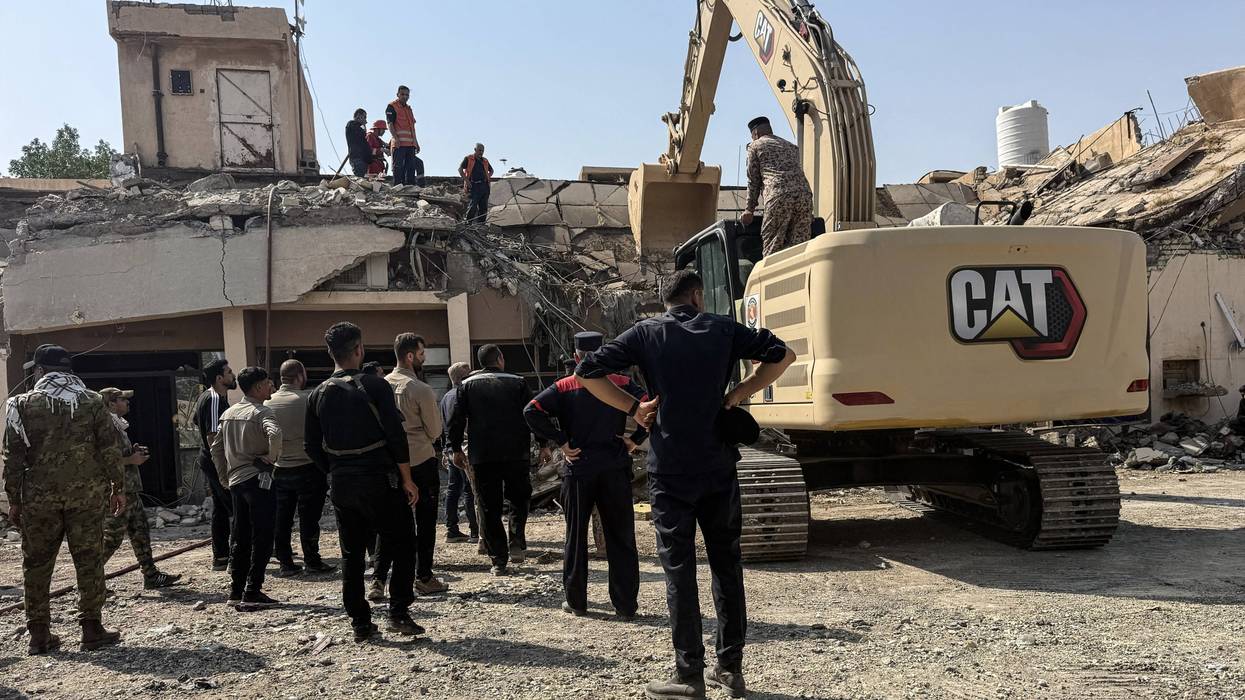
"Without a fundamental shift in US objectives and acceptance of a new regional balance, this conflict could drag on with profound and lasting economic consequences," said one analyst.
US President Donald Trump's illegal war of choice against Iran further spiraled out of control on Wednesday as American forces teamed up with Saudi Arabia to bomb Iraq, strikes that came hours after the US military said it intercepted an Iranian ballistic missile attack on American forces in Jordan.
The US Central Command said its strikes in Iraq targeted "Iran-aligned terrorists that the Islamic Revolutionary Guard Corps (IRGC) directed to attack US forces and Saudi energy infrastructure." The office of Iraqi President Nizar Amidi condemned the US-Saudi airstrikes as "an unacceptable attack and a blatant violation of Iraq's sovereignty." According to Iraq’s Popular Mobilization Forces, at least 20 of its members were killed by the US-Saudi attacks.
The exchange marked the first military escalation since the US and Iran paused strikes over the weekend, briefly hinting at the possibility of a return to diplomatic talks that have thus far not produced a lasting peace agreement.
Trump signaled Wednesday that the US onslaught—which is historically unpopular with the American public—was far from over.
"We're going to beat the fucking shit out of them," Trump told Fox News, according to reporter Trey Yingst. "We'll be hitting them hard."
"We're going to beat the fuc*ing sh*t out of them," President Trump told Fox News after Iran launched a surprise attack against U.S. forces. "We'll be hitting them hard."
The President says U.S. strikes overnight against Iran-backed militias in Iraq were coordinated with the… pic.twitter.com/AeLbEGFCFi
— Trey Yingst (@TreyYingst) July 29, 2026
Iran's Foreign Ministry said in a statement Wednesday that the US-Saudi bombing of Iraq was aimed at expanding "the scope of the war and conflict in the West Asia region."
"The warmongering US regime and its accomplices in the region [are] responsible for the dangerous consequences of these criminal, inhumane, and provocative acts," the foreign ministry added.
Shortly after the flurry of attacks, CNN published a survey showing that 67% of Americans believe that Trump's military actions in Iran have "hurt the US" as oil prices surged once again. Nearly three-quarters of Americans believe Trump does not "have a clear plan for handling the situation in Iran," according to the poll.
"It remains remarkable that Trump won two elections criticizing America’s Middle East wars, attacking the Bush era, and disavowing the regime change business," Sina Toossi, a senior fellow at the Center for International Policy, wrote on social media. "Yet with each passing day, his presidency and legacy are becoming consumed with a Middle East quagmire of his own making."
"Investors should stop assuming this war is nearing its end," Toossi added. "The conditions for a durable settlement do not yet exist. Without a fundamental shift in US objectives and acceptance of a new regional balance, this conflict could drag on with profound and lasting economic consequences."
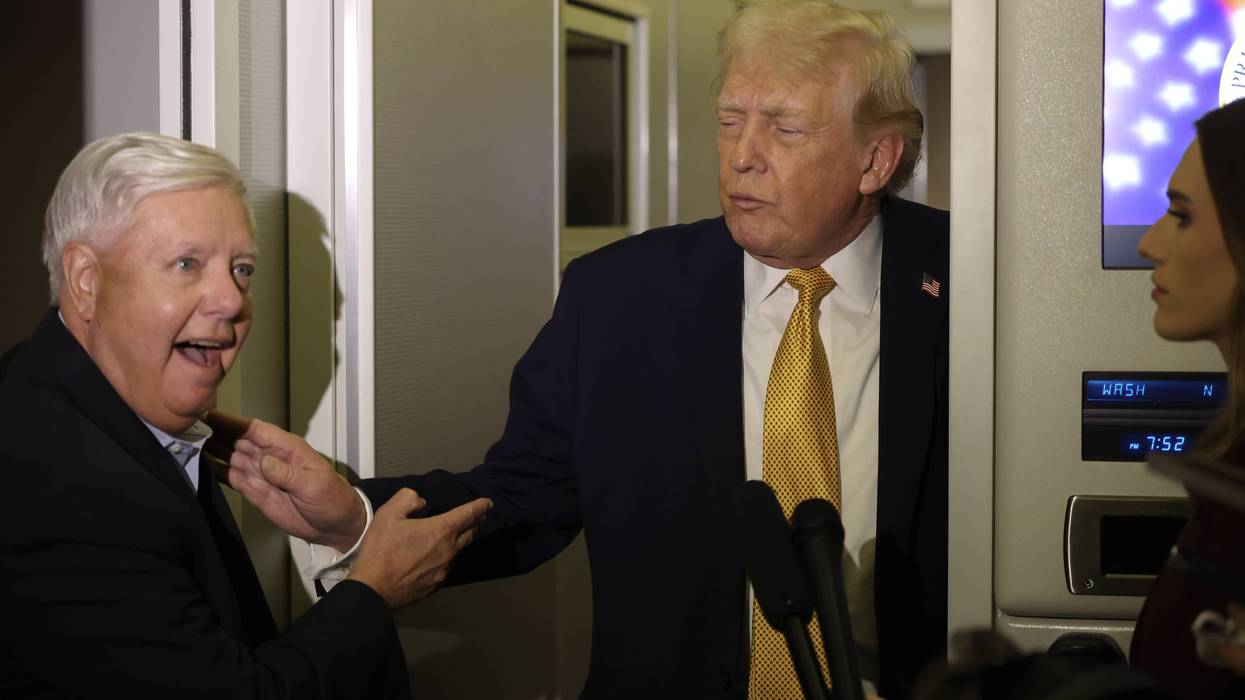
"He's never seen a war that he didn't like."
US President Donald Trump on Tuesday recalled Lindsey Graham's warmongering ways ahead of the late Republican senator's funeral, while once again threatening to commit more atrocities in Iran if an agreement to stop the war he and Israel started there is not reached soon.
Trump phoned in to Fox News' "Fox and Friends" morning show to laud his "great friendship" with the senator from South Carolina, who died on July 11 at the age of 71. Previously unreleased video published over the weekend shows Graham jubilant over Trump's decision to attack Iran in February and saying the president "loves blowing stuff up."
The president told "Fox and Friends" hosts: "He was very much a hawk, as you would say, on Iran. Lindsey liked war, to be honest with you."
"I said, you're a nice guy, how can you like war so much?" the president added. "He was a guy that liked war. I jokingly say—and there's nothing funny about it—but he's never seen a war that he didn't like."
Trump on Lindsey Graham: "He's never seen a war that he didn't like. He was very much into that -- you know, for good reason. He felt that way, some other people feel that way." pic.twitter.com/YbAttT8h8s
— Aaron Rupar (@atrupar) July 28, 2026
Graham had pushed for attacking Iran since at least 2010, both for strategic and financial reasons; in March, he boasted that the United States was "gonna make a ton of money" from the war.
While Graham isn't the only Republican in Congress to make inflammatory comments about Iran—just over the weekend, Sen. John Kennedy of Louisiana opined that "sometimes you have to kill a few chickens to scare the monkeys"—he was the most consistent cheerleader for continuing attacks on the Mideast nation.
Trump also discussed Israeli Prime Minister Benjamin Netanyahu's visit to Washington, DC to attend Graham's funeral and make the case for continued war on Iran. Netanyahu is Trump's partner in the illegal war of choice, and is additionally wanted by the International Criminal Court in The Hague for alleged war crimes and crimes against humanity in Gaza.
Graham was accused of incitement to genocide for advocating the total destruction of Gaza.
Moving on during Tuesday's interview, Trump said that if the Iranian government does not agree to a deal to end the 150-day war, "then I go back and I finish the job."
Trump and Netanyahu have both been accused of sabotaging negotiations with Iran when agreements seemed nearly at hand.
The president again said he would destroy Iranian bridges and power plants if a deal is not reached soon, his latest in a string of war crime threats that has included an earlier genocidal vow to wipe out the "whole civilization" of Iran.
"I could take out most of their bridges in less than an hour," Trump claimed on Tuesday. "I could knock out the power plants within one day."
"I think of 91 million people without power, without the bridges," he said. "And there's always the desalination plants. And who am I hurting there? I'm hurting the people. So I'm not looking to do that, [but Iran] cannot have a nuclear weapon."
US and Israeli intelligence have said for decades—including during both Trump administrations—that Iran is not trying to develop nuclear weapons.

"As more of our servicemembers are killed in Iran, and energy prices continue to skyrocket here at home, Congress cannot sit on its hands."
A Democratic lawmaker in the US House of Representatives on Tuesday introduced legislation that would cut off funding for President Donald Trump's illegal war with Iran.
In announcing the "No Funds for Illegal Wars Act," Rep. John Larson (D-Conn.) said that it was time for the legislature to take the next steps to end the unlawful conflict Trump started in February without congressional authorization.
"As more of our servicemembers are killed in Iran, and energy prices continue to skyrocket here at home, Congress cannot sit on its hands. We have voted to end this illegal war not once, but twice—and we need to enforce the law."
Larson emphasized that his bill would not merely end funding for the illegal Iran war, which has cost tens of billions of dollars and thousands of lives. The legislation, the Connecticut Democrat said, would also “block Donald Trump or any future president from waging war without explicit approval from Congress, as both the Constitution and War Powers Act require.”
Larson last week joined Rep. Gregory Meeks (D-NY) in filing a resolution that would require House Speaker Mike Johnson (R-La.) to “initiate or intervene in litigation” to enforce the war powers resolution that passed in both chambers of Congress last month and compel the president to end the conflict.
Trump predicted that the Iran war would only last a few weeks when it began, but the conflict is now in its sixth month and the president last week said he was considering authorizing what he described as a "massive attack" on Iran that he vowed would be "bigger than ever before."